The Discrimination Against Persons with Disabilities (Prohibition) Act, 2018, is Nigeria’s landmark law protecting the rights of persons with disabilities. This article breaks down what it means, why it matters, and how every Nigerian can help to build a more inclusive society.
⸻
Introduction
In January 2019, something remarkable happened in Nigeria — something that many people with disabilities had been waiting decades for. Then-President Muhammadu Buhari finally signed into law the Discrimination Against Persons with Disabilities (Prohibition) Act, 2018.
For years, disability rights advocates, organizations of persons with disabilities, and individuals had pushed, protested, and pleaded for this kind of legal recognition. And when it finally came, there was a mix of excitement, relief, and curiosity.
What does this Act really mean? How does it affect the everyday lives of persons with disabilities in Nigeria? And more importantly, how can the average Nigerian — whether disabled or not — play a part in making sure the law actually works?
Let’s break it all down in simple terms.
A Brief Background
Before this law was passed, Nigeria had no comprehensive national legislation protecting the rights of persons with disabilities. Some states like Lagos, Kwara, Plateau, etc, had local disability laws, but there was no unified national standard.
Because of this, discrimination and exclusion were common — and often went unchallenged.
Imagine being denied a job because you can’t walk. Or being refused admission into a school because you’re blind. Or being told you can’t enter a public building because there’s no ramp or accessible toilet.
For most Nigerians with disabilities, that was normal life.
So, the 2018 Act came as a turning point — a promise of dignity, inclusion, and equal opportunity.
What the Law Actually Says
Here are some key things the law provides, explained in everyday language:
- No More Discrimination: The Act clearly states that no one should be discriminated against because of disability — not in schools, workplaces, hospitals, transport companies, or government offices. Everyone deserves fair and equal treatment.
- Access to Public Buildings: Every public building — schools, offices, markets, banks, hospitals — must be accessible to persons with disabilities. That means ramps, elevators, handrails, and other supportive features. The law gave a five-year window (from 2019) for compliance, though sadly, many buildings are still lagging.
- Right to Education and Employment: The law guarantees that persons with disabilities have equal access to education and jobs. Schools can no longer reject students because of disability, and employers must not deny qualified applicants for the same reason. In fact, public institutions are required to reserve at least 5% of employment opportunities for persons with disabilities.
- Accessible Transportation: Airlines, bus companies, and railway operators must make their services accessible. This includes priority seating, accessible entry points, and communication support for the blind and deaf.
- Health and Dignity: The Act protects persons with disabilities from abuse or neglect in hospitals and other facilities. It also ensures access to healthcare and assistive devices (like wheelchairs, hearing aids, or white canes) at affordable rates.
- National Commission for Persons with Disabilities (NCPWD): To ensure implementation, the law created the National Commission for Persons with Disabilities (NCPWD) — the agency responsible for enforcing the law, creating awareness, and handling complaints.
Why This Law Matters
For many Nigerians with disabilities, this Act represents hope. It’s not just about legal rights — it’s about being recognized as equal members of society.
Before now, disability was often treated as a personal tragedy instead of a social issue. People were more likely to show pity than to push for equality.
But with this law, the conversation has changed. Persons with disabilities now have a legal voice — a means to demand inclusion, respect, and opportunity.
It also sends a strong message to the general public: disability is not inability. With the right support, everyone can contribute meaningfully to the nation’s development.
The Reality: Challenges and Gaps
Now, let’s be honest — passing a law is one thing, implementing it is another.
More than six years after the Act came into effect, several challenges remain:
- Low Awareness: Many Nigerians (including officials and even some persons with disabilities) don’t know what the Act says.
- Weak Enforcement: The NCPWD is doing its best, but enforcement power and funding remain limited.
- Poor Accessibility: Most public buildings, schools, and transport systems still lack ramps, elevators, or accessible restrooms — even though the five-year compliance period has expired.
- Cultural Barriers: Stigma and ignorance persist. Some people still view disability through the lens of superstition, pity, or shame rather than inclusion.
These are real issues, but they don’t erase the progress made. Every major reform takes time, and awareness is steadily growing.
What It Means for Every Nigerian
This law isn’t just for persons with disabilities — it’s for everyone.
It challenges us to see people first, not their disabilities. It calls on businesses, schools, and government agencies to be more inclusive. It teaches young people empathy, fairness, and respect.
When society becomes accessible, everyone benefits. A ramp that helps a wheelchair user today could help an elderly person or a pregnant woman tomorrow. Accessibility is not a favour — it’s good design and good humanity.
How You Can Play Your Part
Here are a few simple ways to support inclusion and make the law work:
- Learn About the Law: Knowledge is power. Read and share information about the Disability Act. Discuss it in your school, office, or community group.
- Speak Up Against Discrimination: If you see or hear of unfair treatment based on disability, don’t stay silent. Stand up, support the person, and report the incident.
- Make Your Space Accessible: If you run a business, school, or office, make it welcoming — add ramps, clear signs, or assistive tools.
- Support Disability Advocacy Groups: Organizations like Disability Rights Protection Initiative (DRP Initiative) are working daily to raise awareness and empower people with disabilities. Partner, volunteer, or donate — every effort counts.
Final Thoughts
The Discrimination Against Persons with Disabilities (Prohibition) Act, 2018 is more than a law — it’s a call for change. It reminds us that disability rights are human rights, and inclusion is everyone’s responsibility.
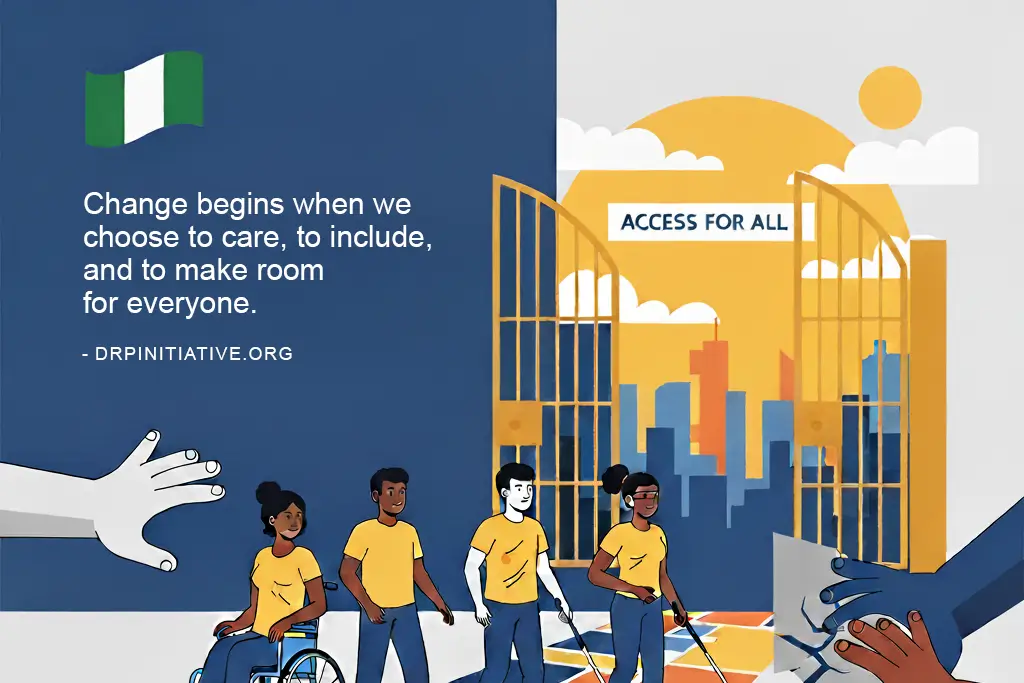
But for this law to truly work, we must all do our part — government, businesses, communities, and individuals. Change begins when we choose to care, to include, and to make room for everyone.
Let’s build a Nigeria where no one is left behind, because the true strength of a nation lies in how it treats its most vulnerable members.